
The 19th and early 20th centuries brought both challenges and opportunities for Chaldean communities. Ottoman reforms, Western missionary activity, and modernization created new dynamics. This period produced remarkable Chaldean figures who gained international recognition as scholars, writers, archaeologists, and humanitarians. The modern Chaldean identity was clarified and strengthened, even as communities faced continued persecution and displacement.
ENTRY 49: ALQOSH – CHALDEAN TOWN AND TOMB OF PROPHET NAHUM
Time Period: Ancient – Present
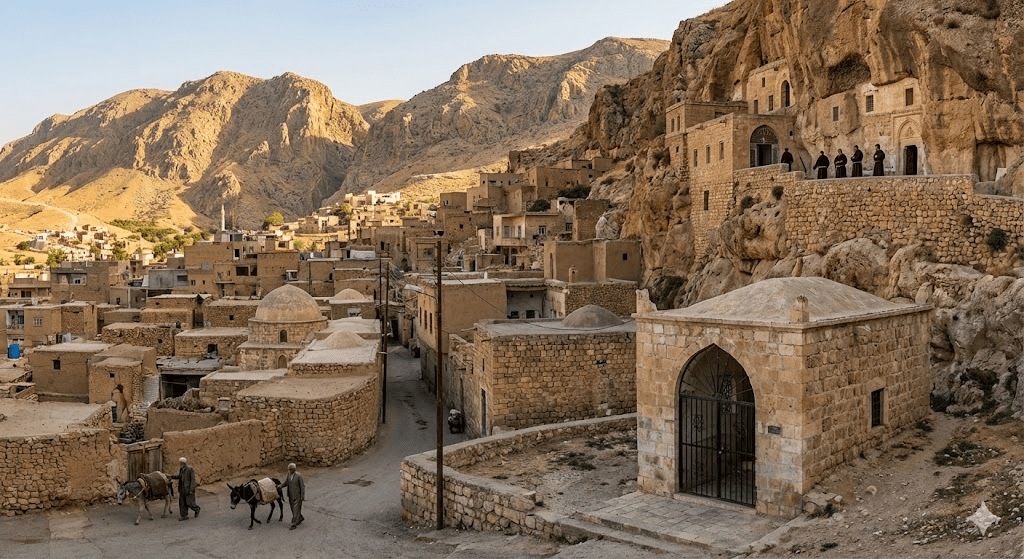
Alqosh, a historic Chaldean town in northern Iraq, has maintained continuous Christian presence for nearly two millennia. The town is home to the Monastery of Saint Hormizd and the traditional tomb of the Hebrew prophet Nahum.
Alqosh represents the enduring connection between Chaldean Christians and their ancestral homeland. Despite centuries of upheaval, the town preserved its distinct Chaldean character and served as a center of religious and cultural life.
Sacred Heritage:
- Continuous Christian presence (2,000+ years)
- Tomb of Prophet Nahum
- Monastery of Saint Hormizd
- Center of Chaldean religious life
ENTRY 50: MARIA THERESA ASMAR – 19TH CENTURY AUTHOR AND TRAVELER
Time Period: 19th Century CE
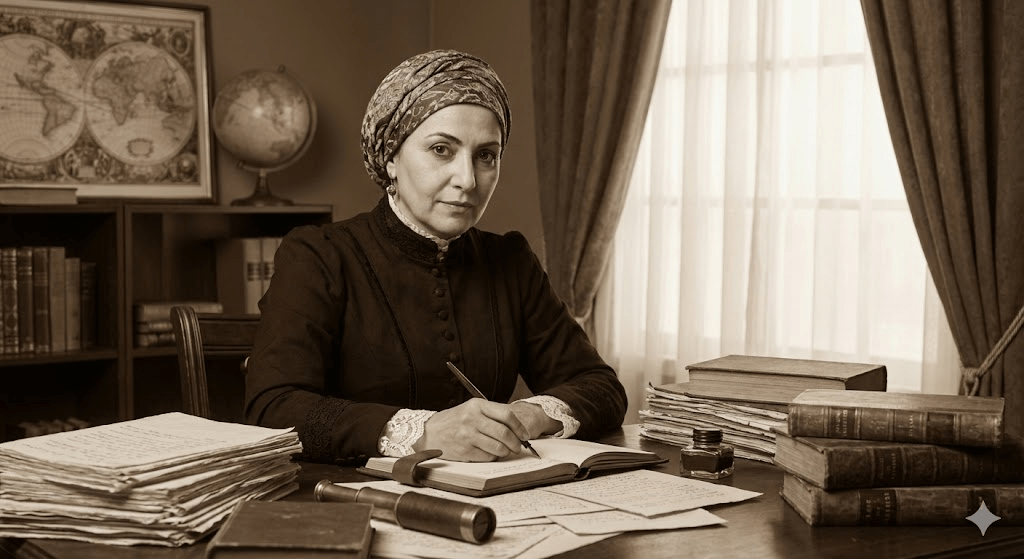
Maria Theresa Asmar was a remarkable Chaldean woman who became an author and traveler in the 19th century. In an era when women—especially Middle Eastern women—rarely published, she wrote memoirs and travel accounts in English.
Her writings provide unique insights into Chaldean life, women’s experiences, and cross-cultural encounters in the Ottoman Empire and Europe. She represents the beginning of Chaldean women’s voices in published literature.
Literary Pioneer:
- First known Chaldean female published author
- Memoirs and travel writing
- Cross-cultural perspective
- Women’s voice in literature
ENTRY 51: HORMUZD RASSAM – PIONEERING ARCHAEOLOGIST
Time Period: 1826-1910 CE
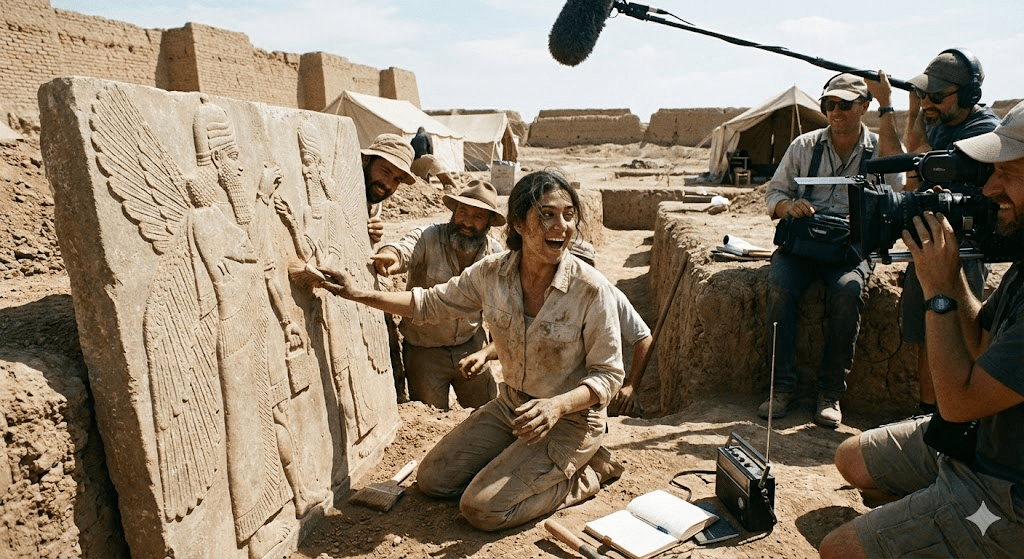
Hormuzd Rassam was a Chaldean archaeologist who made some of the most important discoveries in Mesopotamian archaeology. Working with British archaeologist Austen Henry Layard, Rassam discovered the Library of Ashurbanipal at Nineveh, containing thousands of cuneiform tablets including the Epic of Gilgamesh.
He was the first native Assyrian/Chaldean to conduct major archaeological work in Mesopotamia, helping uncover his own people’s ancient heritage. His discoveries revolutionized understanding of ancient Mesopotamian civilization.
Archaeological Legacy:
- Discovery of Library of Ashurbanipal (1853)
- Unearthed Epic of Gilgamesh tablets
- First native Mesopotamian archaeologist
- Bridge between ancient and modern heritage
ENTRY 52: REV. JOSEPH NAAYEM (1868-1964) – PRIEST, SCHOLAR, AND HUMANITARIAN
Time Period: 1868-1964 CE

Father Joseph Naayem was a Chaldean Catholic priest who survived and documented the Assyrian/Chaldean genocide during World War I. His 1920 book Shall This Nation Die? provided detailed testimony of the massacres that killed hundreds of thousands of Chaldean, Assyrian, and Armenian Christians.
Naayem dedicated his life to seeking justice for genocide victims, documenting atrocities, and advocating for survivors. His testimony remains a crucial historical record of this tragedy.
Humanitarian Legacy:
- Genocide documentation and testimony
- Author of Shall This Nation Die? (1920)
- Advocate for survivors
- Historical witness and scholar
ENTRY 53: MODERN ASSYRIAN IDENTITY DEBATE
Time Period: 19th Century – Present

The 19th and 20th centuries saw complex debates about identity among Aramaic-speaking Christian communities of Iraq. Terms like “Chaldean,” “Assyrian,” “Syriac,” and “Aramaean” reflect different historical, linguistic, and ecclesiastical identities.
While some advocate for a unified “Assyrian” identity encompassing all groups, many Chaldeans maintain their distinct identity rooted in their specific history, church affiliation, and cultural heritage. This ongoing dialogue reflects the complexity of identity in diaspora communities.
Identity Discourse:
- Multiple identity terms and affiliations
- Distinct Chaldean Catholic identity
- Shared heritage, distinct communities
- Ongoing dialogue and respect
ENTRY 54: EVIDENCE OF CHALDEAN PRESENCE
Time Period: 19th Century – Present

Extensive historical evidence documents continuous Chaldean presence and distinct identity. Ottoman census records, church documents, European travelers’ accounts, and official correspondence all reference “Chaldeans” as a distinct community.
This documentation counters revisionist attempts to erase or minimize Chaldean identity, providing concrete proof of historical continuity.
Documentary Evidence:
- Ottoman census and millet records
- Church registries and patriarchal documents
- European diplomatic correspondence
- Archaeological and linguistic evidence
ENTRY 55: CHALDEAN LANGUAGE – ARAMAIC LEGACY
Time Period: Ancient – Present

Chaldeans speak Neo-Aramaic dialects, continuing a linguistic tradition spanning over 3,000 years. Aramaic was the lingua franca of the ancient Near East and the language Jesus Christ spoke.
Modern Chaldean dialects preserve this ancient heritage, making Chaldean communities custodians of one of the world’s oldest continuously spoken languages. However, language shift to Arabic and displacement threaten this invaluable linguistic heritage.
Linguistic Heritage:
- Speakers of Neo-Aramaic dialects
- Continuation of language of Jesus Christ
- 3,000+ year linguistic tradition
- Endangered language requiring preservation
ENTRY 56: DNA TESTING AND ANCIENT HERITAGE
Time Period: 21st Century CE

Recent genetic studies of Chaldean populations reveal strong genetic continuity with ancient Mesopotamian populations. DNA evidence confirms that modern Chaldeans are indeed descendants of the ancient inhabitants of Mesopotamia.
These scientific findings validate what Chaldeans have always known—they are the living descendants of one of humanity’s oldest civilizations.
Genetic Evidence:
- DNA continuity with ancient Mesopotamians
- Scientific validation of heritage claims
- Genetic distinctiveness of population
- Living link to ancient civilizations
 EXPLORE THE CHALDEAN HISTORY