
The Chaldean story begins in Mesopotamia, the land between the Tigris and Euphrates rivers. Here, our ancestors invented writing, developed the first legal codes, built magnificent cities, and laid the foundation for human civilization. From Abraham’s birthplace in Ur of the Chaldeans to the reign of Nebuchadnezzar II, this period established the Chaldeans as scholars, astronomers, and rulers of one of history’s greatest empires.
ENTRY 1 – WHO ARE THE CHALDEANS?
Time Period: 5000+ BCE – Present
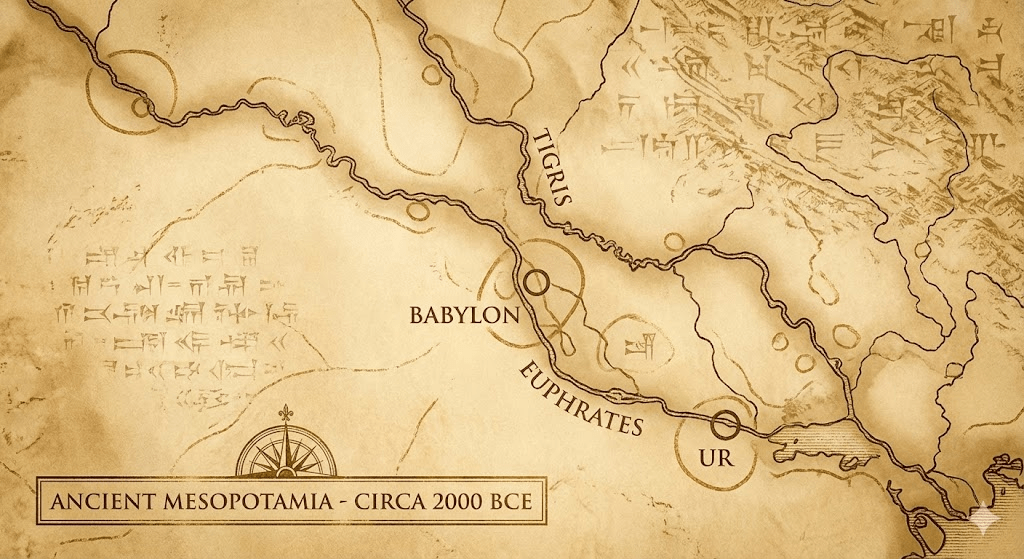
The Chaldeans are descendants of ancient Mesopotamia, known as the “cradle of civilization.” Originating in the land between the Tigris and Euphrates rivers, the Chaldeans were among the earliest inhabitants of what is now southern Iraq.
The term “Chaldean” has been used historically to describe both an ethnic group and a scholarly class renowned for their expertise in astronomy, mathematics, and divination. The Chaldeans established themselves as a distinct people with a rich cultural and religious heritage that has endured for millennia.
Key Facts:
- Origins in Mesopotamia (modern-day Iraq)
- Speakers of Aramaic, the language of Jesus Christ
- Pioneers of writing, astronomy, and mathematics
- Builders of ancient cities and centers of learning
ENTRY 2: ABRAHAM’S LINEAGE FROM UR OF THE CHALDEANS
Time Period: ~2000 BCE (Biblical Era)

The Bible identifies Abraham, the patriarch of Judaism, Christianity, and Islam, as hailing from “Ur of the Chaldeans” (Genesis 11:28-31). This connection places the Chaldeans at the heart of one of the most significant religious narratives in human history.
Ur was a major Sumerian city-state in ancient Mesopotamia, and its association with Abraham underscores the deep roots of Chaldean civilization. Archaeological excavations at the site of Ur (modern-day Tell el-Muqayyar in Iraq) have revealed a sophisticated urban center with temples, ziggurats, and advanced infrastructure.
Biblical References:
- Genesis 11:28: “Haran died in the presence of his father Terah in the land of his birth, in Ur of the Chaldeans.”
- Genesis 15:7: “I am the LORD who brought you out of Ur of the Chaldeans.”
ENTRY 3: BIBLICAL PERSPECTIVES ON THE CHALDEANS
Time Period: 8th – 6th Century BCE

The Hebrew Bible (Old Testament) contains numerous references to the Chaldeans, often in the context of the Babylonian Empire and its interactions with the Kingdom of Judah. These references provide valuable insights into how the Chaldeans were perceived by their contemporaries.
The prophet Habakkuk describes the Chaldeans as “that fierce and impetuous people” (Habakkuk 1:6), while the Book of Daniel portrays them as learned scholars and advisors in the court of Nebuchadnezzar.
Key Biblical References:
- 2 Kings 24-25: Chaldean conquest of Jerusalem
- Book of Daniel: Chaldeans as wise men and astrologers
- Habakkuk 1:6: Description of Chaldean military might
ENTRY 4: FIRST ARCHAEOLOGICAL MENTION
Time Period: 9th Century BCE
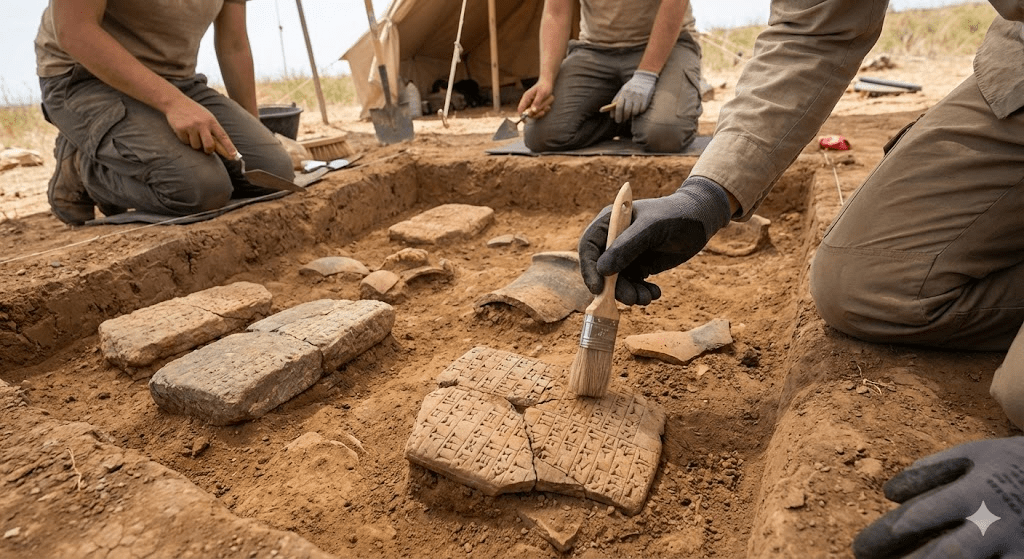
The earliest archaeological evidence of the Chaldeans comes from Assyrian inscriptions dating to the 9th century BCE. These records document the Chaldeans as a distinct tribal group inhabiting the marshlands of southern Mesopotamia.
Assyrian king Shalmaneser III (858-824 BCE) recorded military campaigns against Chaldean tribes, providing the first extra-biblical confirmation of their existence. These inscriptions describe the Chaldeans as formidable opponents who controlled strategic territories along the Persian Gulf.
Archaeological Evidence:
- Assyrian royal annals mentioning Chaldean tribes
- Geographic descriptions of Chaldean territories
- Military campaigns and conflicts with Assyria
ENTRY 5: CHALDEAN TRIBES
Time Period: 9th – 7th Century BCE
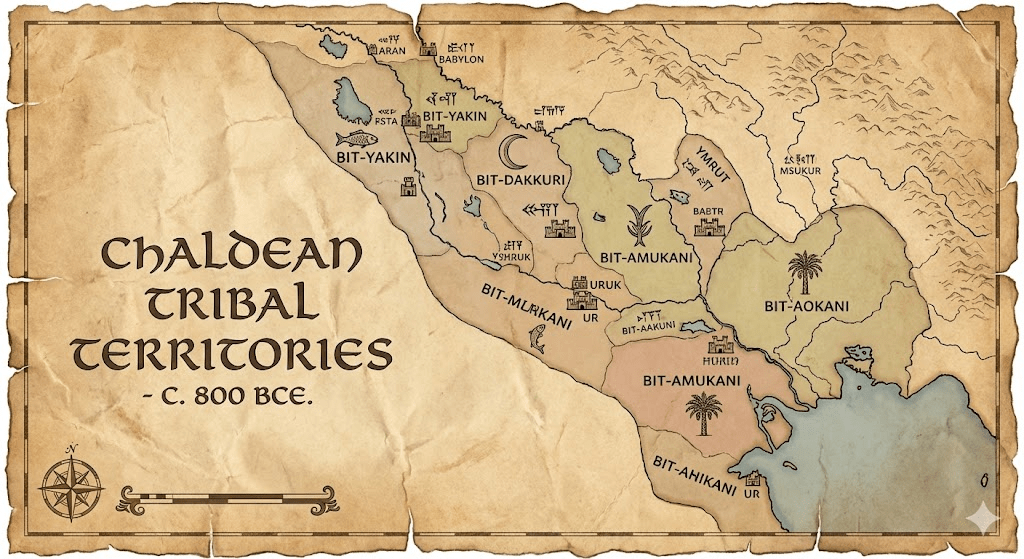
Historical sources identify several major Chaldean tribes that dominated southern Mesopotamia during the first millennium BCE. The most prominent were Bit-Yakin, Bit-Dakkuri, and Bit-Amukani.
These tribes controlled crucial territories along trade routes and waterways, giving them significant economic and political influence. Their strategic locations allowed them to challenge Assyrian dominance and eventually establish the Neo-Babylonian Empire.
Major Chaldean Tribes:
- Bit-Yakin: Controlled marshlands near the Persian Gulf
- Bit-Dakkuri: Dominated central southern Mesopotamia
- Bit-Amukani: Held territories near Babylon
ENTRY 6: ASSYRIAN DEPORTATION OF THE CHALDEANS
Time Period: 8th Century BCE

The Assyrian Empire, seeking to control Mesopotamia, implemented brutal deportation policies against rebellious populations, including the Chaldeans. Assyrian king Tiglath-Pileser III (745-727 BCE) and his successors forcibly relocated Chaldean communities to prevent organized resistance.
These deportations scattered Chaldean populations across the empire but failed to eliminate their identity or political aspirations. The resilience of the Chaldeans during this period laid the groundwork for their eventual rise to power.
Historical Impact:
- Mass deportations under Assyrian rule
- Dispersal of Chaldean communities
- Preservation of identity despite displacement
ENTRY 7: CHALDO’S REBELLION AGAINST SENNACHERIB
Time Period: 703-689 BCE
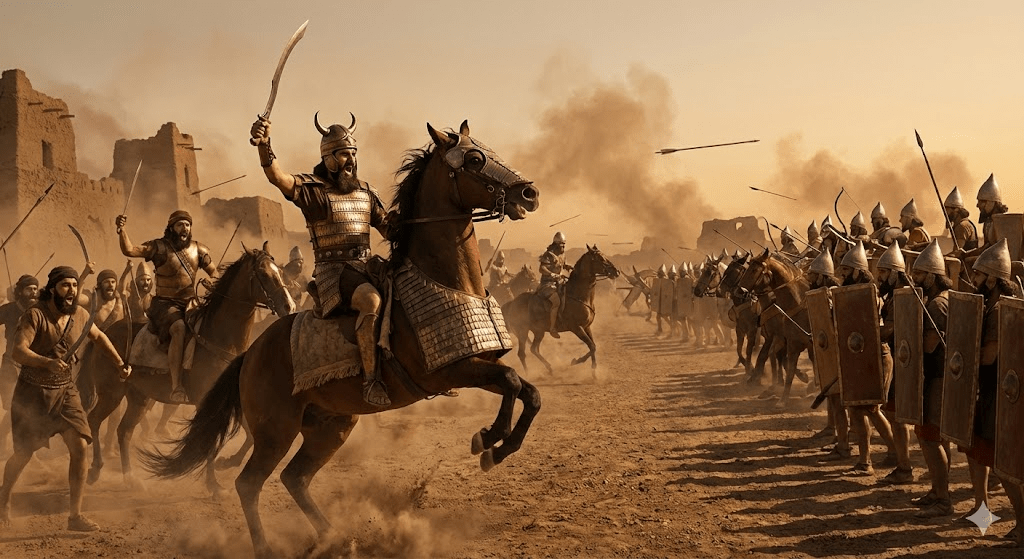
Merodach-Baladan II, a Chaldean chieftain of the Bit-Yakin tribe, led multiple rebellions against Assyrian domination. His resistance against Sennacherib (705-681 BCE) represents one of the most significant Chaldean challenges to Assyrian power.
Though ultimately unsuccessful, these rebellions demonstrated Chaldean determination to maintain independence and set the stage for the eventual Chaldean conquest of Babylon.
Key Events:
- Merodach-Baladan’s seizure of Babylon
- Alliance-building with neighboring kingdoms
- Guerrilla warfare against Assyrian forces
ENTRY 8: CHALDEAN ACCOUNT OF GENESIS
Time Period: ~300 BCE (Recording of Earlier Traditions)
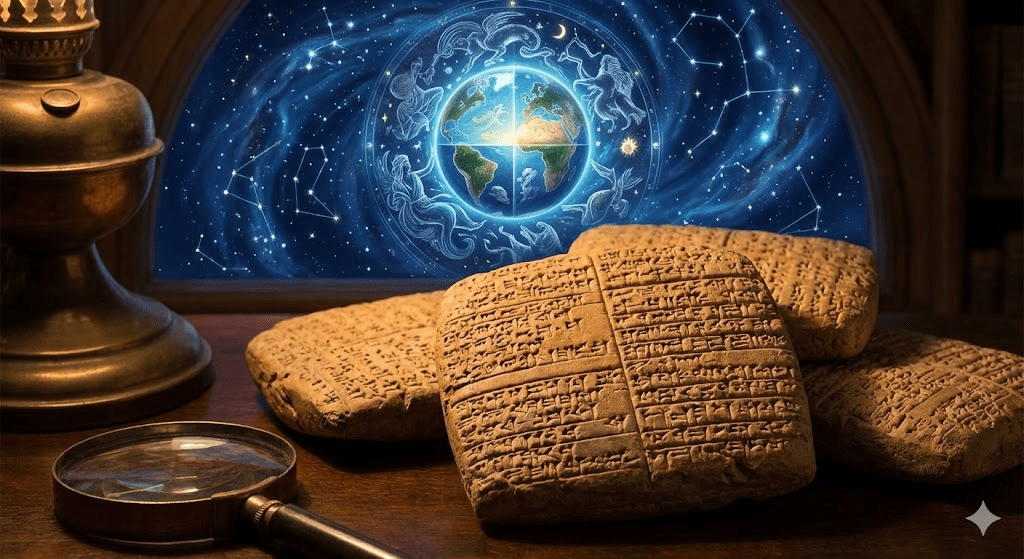
Berossus, a Chaldean priest and historian, recorded Babylonian creation myths that parallel elements of the Biblical Genesis account. Writing in Greek for a Hellenistic audience, Berossus preserved ancient Mesopotamian traditions about the origin of the world and humanity.
These accounts, including the Epic of Gilgamesh and the Enuma Elish, influenced religious narratives throughout the ancient Near East and provide insight into Chaldean cosmology and theology.
Cultural Significance:
- Preservation of ancient creation narratives
- Influence on biblical accounts
- Bridge between Mesopotamian and Hellenistic thought
ENTRY 9: BEROSSUS, THE CHALDEAN PRIEST AND HISTORIAN
Time Period: ~290 BCE

Berossus was a Chaldean priest of Bel (Marduk) who wrote a comprehensive history of Babylonia in Greek called the Babyloniaca. His work preserved Mesopotamian traditions, astronomical knowledge, and historical records for the Hellenistic world.
Though his original writings are lost, fragments survive through later historians like Josephus and Eusebius. Berossus established a school of astrology on the Greek island of Kos, spreading Chaldean astronomical knowledge throughout the Mediterranean.
Contributions:
- Recorded Babylonian history and mythology
- Transmitted Chaldean astronomical knowledge to Greeks
- Founded astrological school
ENTRY 10: THE SIBYL
Time Period: Hellenistic Period (~300 BCE – 100 CE)

The Sibylline Oracles, a collection of prophetic texts, contain references to Chaldean wisdom and Babylonian traditions. These texts, written in Greek hexameter verse, were influential in both pagan and early Christian communities.
The Babylonian Sibyl, one of the legendary prophetesses, was said to have been a daughter of Berossus, linking Chaldean priestly knowledge with Hellenistic prophetic traditions.
Historical Context:
- Sibylline prophecies in ancient world
- Chaldean influence on prophetic literature
- Cultural synthesis of East and West
ENTRY 11: CHALDEAN RULERS LEADING TO NEBUCHADNEZZAR
Time Period: 626-605 BCE

Nabopolassar (626-605 BCE) founded the Chaldean dynasty that would rule Babylon and establish the Neo-Babylonian Empire. A Chaldean chieftain, Nabopolassar allied with the Medes to overthrow Assyrian domination and claim Babylon’s throne.
His reign marked the beginning of Chaldean imperial power and set the stage for his son Nebuchadnezzar II to create one of the ancient world’s greatest empires.
Dynasty Founders:
- Nabopolassar: Founder of Chaldean Babylon
- Conquest of Assyria (612 BCE)
- Establishment of Neo-Babylonian Empire
ENTRY 12: NEBUCHADNEZZAR II, KING OF KINGS
Time Period: 605-562 BCE

Nebuchadnezzar II stands as the most famous Chaldean ruler in history. Under his 43-year reign, Babylon reached unprecedented heights of power, wealth, and cultural achievement. He transformed Babylon into the most magnificent city of the ancient world.
Major Achievements:
- Construction of the Hanging Gardens (one of Seven Wonders)
- Rebuilding of Ishtar Gate and Processional Way
- Conquest of Jerusalem and Judean Kingdom
- Expansion of Babylonian Empire to its greatest extent
Biblical References: Nebuchadnezzar appears prominently in the biblical books of 2 Kings, 2 Chronicles, Jeremiah, Ezekiel, and Daniel, where he is portrayed as both conqueror and, eventually, a figure who acknowledges the God of Israel.
 EXPLORE THE CHALDEAN HISTORY