
Christianity spread rapidly through Mesopotamia in the first centuries CE, transforming Chaldean identity. The Church of the East became one of the world’s most expansive Christian communities, reaching from Persia to China. This period saw the flourishing of Chaldean Christian scholarship, the preservation of classical knowledge, and the development of a distinct Chaldean Christian identity that continues today.
ENTRY 25: CHALDEANS AND CHRISTIANITY IN CHINA (400 CE)
Time Period: 5th – 14th Century CE

The Church of the East missionaries, many of Chaldean origin, brought Christianity to China along the Silk Road. The famous Xi’an Stele (erected 781 CE) documents this remarkable missionary effort in both Chinese and Syriac (a dialect of Aramaic).
Chaldean Christian communities thrived in Tang Dynasty China, establishing churches, monasteries, and schools. This represents one of history’s most successful cross-cultural missionary movements.
Missionary Achievement:
- Spread of Christianity along Silk Road
- Xi’an Stele documentation
- Churches established across China
- Cultural adaptation while maintaining faith
ENTRY 26: SAINT HORMIZD CHALDEAN CHURCH (397 CE)
Time Period: 397 CE – Present
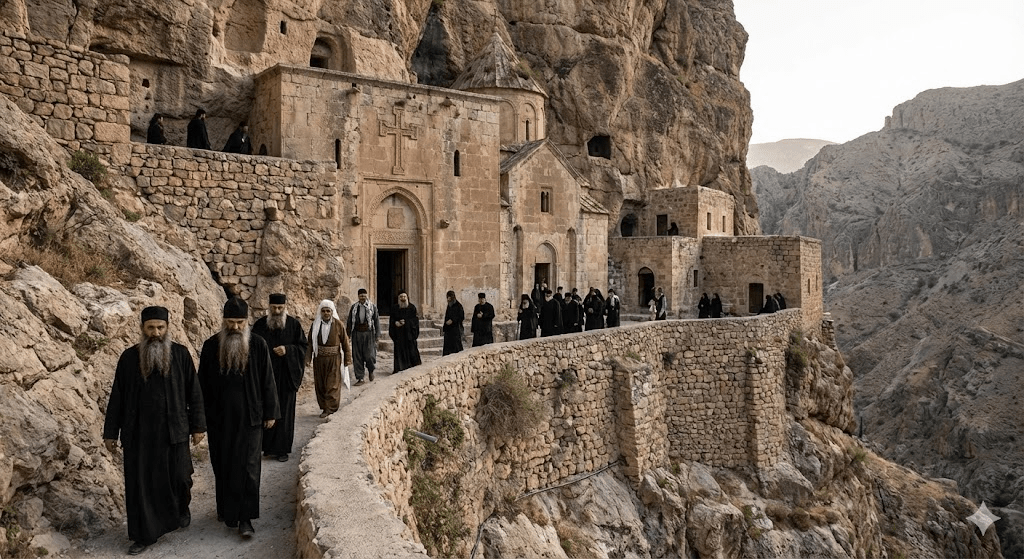
The Monastery of Saint Hormizd, founded in 640 CE on the site where Saint Hormizd lived as a hermit beginning in 397 CE, stands as one of the oldest continuously operating Christian monasteries in the world.
Located in the mountains near Alqosh, Iraq, this monastery served as the seat of the Patriarch of the Church of the East for centuries and remains a pilgrimage site for Chaldean Christians worldwide.
Sacred Site:
- Founded in 7th century on 4th century hermitage
- Patriarchal seat for centuries
- Continuous Christian presence for 1,600+ years
- Major pilgrimage destination
ENTRY 27: NESTORIUS AND THE CHURCH OF THE EAST
Time Period: 5th Century CE

Nestorius (386-450 CE), Patriarch of Constantinople, became a controversial figure in Christian history. After the Council of Ephesus (431 CE) condemned his teachings, many of his followers fled to Persia, where they found refuge in the Church of the East.
The term “Nestorian” became attached to the Church of the East, though the church itself preferred other names. This theological controversy shaped the distinct identity of Eastern Christianity.
Historical Significance:
- Council of Ephesus (431 CE)
- Migration of Nestorius’ followers to Persia
- Development of Church of the East theology
- Misidentification as purely “Nestorian”
ENTRY 28: ADOPTION OF NESTORIANISM
Time Period: 5th – 7th Century CE

The Church of the East formally adopted a theological position sympathetic to Nestorius during the 5th and 6th centuries. This theological stance distinguished the church from both Catholic and Orthodox Christianity, though the differences were often more linguistic and cultural than doctrinal.
The church maintained its independence from both Rome and Constantinople, developing its own liturgical traditions in Aramaic and its own ecclesiastical hierarchy.
Theological Development:
- Distinctive Christological position
- Independent ecclesiastical structure
- Aramaic liturgy preservation
- Expansion across Asia
ENTRY 29: DISCOVERY OF CHALDEAN ORACLES
Time Period: Hellenistic Period (Recorded Medieval Period)

The Chaldean Oracles, a collection of mystical and theurgical texts attributed to Julian the Chaldean, were rediscovered and studied throughout the medieval period. These texts influenced Neoplatonic philosophy and fascinated scholars seeking ancient wisdom.
Though the original texts are lost, fragments preserved in later philosophical works show the enduring influence of Chaldean mystical thought on Western esotericism.
Mystical Legacy:
- Influence on Neoplatonism
- Study by medieval scholars
- Preservation in fragments
- Continuing esoteric influence
ENTRY 30: CHALDEAN CHRISTIANITY IN ABBASID ERA
Time Period: 8th – 13th Century CE
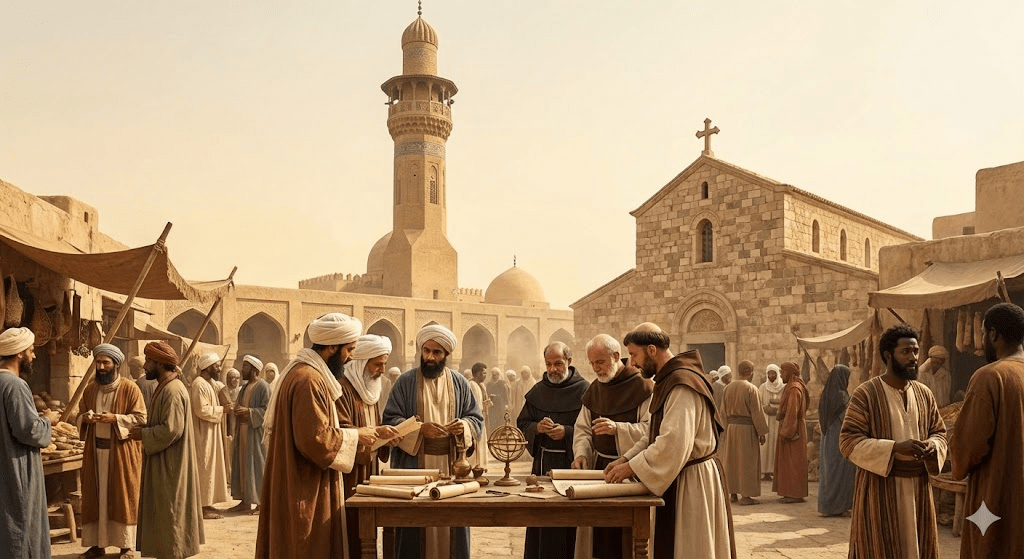
Under the Abbasid Caliphate (750-1258 CE), Chaldean Christians played vital roles as physicians, translators, scholars, and advisors to caliphs. The translation movement in Baghdad, where Greek scientific and philosophical works were translated into Arabic, relied heavily on Chaldean Christian scholars fluent in Greek, Aramaic, and Arabic.
This period represented remarkable interfaith cooperation and intellectual flourishing.
Golden Age Contribution:
- Medical scholarship and practice
- Translation of Greek classics
- Scientific and philosophical advancement
- Service in caliphal court
ENTRY 31: HUNAYN IBN ISHAQ (JOHANNITIUS)
Time Period: 809-873 CE

Hunayn ibn Ishaq, a Chaldean Christian physician and scholar, became one of the most important figures in the translation movement. Known in Latin as Johannitius, he translated over 100 Greek medical and scientific works into Arabic, including Galen’s complete works and Hippocrates’ treatises.
His translations became the foundation for medical education in both the Islamic world and medieval Europe. He also wrote original medical treatises and developed a sophisticated translation methodology.
Scholarly Achievement:
- Translation of 100+ Greek medical texts
- Original medical writings
- Influence on Islamic and European medicine
- Development of translation methodology
ENTRY 32: IBN WAHSHIYYA (10th Century)
Time Period: ~900 CE

Ibn Wahshiyya was a scholar who claimed Nabataean (related to Chaldean) heritage and wrote extensively on ancient Mesopotamian agriculture, alchemy, and mystical knowledge. His most famous work, Nabataean Agriculture, purported to preserve ancient agricultural wisdom.
Though some scholars debate the authenticity of his attributions, his work demonstrates the continuing interest in and claimed connection to ancient Mesopotamian learning.
Contributions:
- Preservation of agricultural knowledge
- Alchemical writings
- Claims of Nabataean/Chaldean heritage
- Transmission of ancient wisdom
ENTRY 33: EARLY MEDIEVAL CHRISTIAN RULE
Time Period: 8th – 11th Century CE
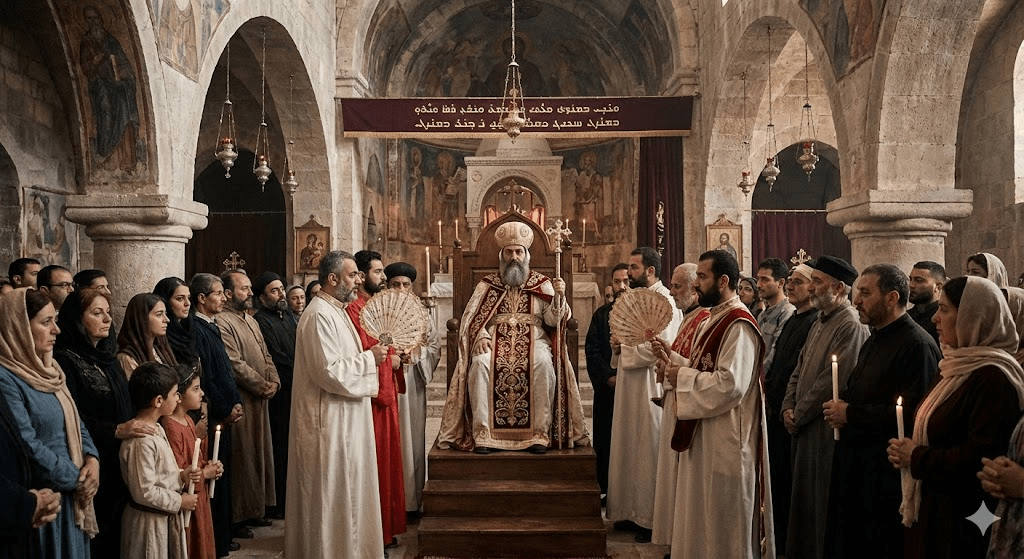
During the early medieval period, the Church of the East maintained significant autonomy under Islamic rule. The Patriarch of the Church of the East (Catholicos) governed a vast ecclesiastical jurisdiction stretching from Cyprus to China.
Chaldean Christian communities enjoyed protected status as “People of the Book” and continued their religious practices, though they faced restrictions and periodic persecution.
Ecclesiastical Authority:
- Patriarchal governance
- Widespread church jurisdiction
- Protected minority status
- Continuing religious tradition
ENTRY 34: MICHAEL THE GREAT (1199 CE)
Time Period: 1126-1199 CE

Michael the Great, Syriac Orthodox Patriarch of Antioch, wrote an extensive chronicle documenting the history of the Church, including detailed accounts of Chaldean Christians and the Church of the East. His chronicle is a crucial source for understanding medieval Middle Eastern Christianity.
Historical Documentation:
- Comprehensive church history
- Documentation of Chaldean communities
- Preservation of historical memory
- Primary source for medieval Christianity
ENTRY 35: SABRISHO IBN AL-MASIHI (1226-1257)
Time Period: 13th Century CE

Sabrisho V served as Patriarch of the Church of the East during a tumultuous period that included the Mongol invasions. His leadership helped preserve the church through one of history’s most devastating periods.
The Mongol conquest of Baghdad in 1258 marked the end of the Abbasid Caliphate and brought dramatic changes to the region’s religious landscape.
Leadership in Crisis:
- Patriarchal leadership during Mongol invasions
- Church preservation during upheaval
- Navigation of political transformation
ENTRY 36: CHALDEANS IN MEDIEVAL PISA
Time Period: 13th Century CE

Historical records document the presence of Chaldean Christians in medieval Pisa, Italy. These communities, connected through trade networks, maintained their distinct identity while participating in Mediterranean commerce and cultural exchange.
This presence demonstrates the far-reaching networks of Chaldean diaspora communities even in the medieval period.
Diaspora Presence:
- Trade connections to Europe
- Maintenance of identity abroad
- Mediterranean commercial networks
- Early diaspora communities
 EXPLORE THE CHALDEAN HISTORY