
This era witnessed both the flourishing and persecution of Chaldean Christians. From the Mongol invasions to the Ottoman Empire, Chaldean communities faced immense challenges while preserving their faith, language, and cultural identity. The period also saw the formal union with the Catholic Church, creating the Chaldean Catholic Church as we know it today. Despite persecution and loss, Chaldean scholars, writers, and travelers made remarkable contributions to global knowledge.
ENTRY 37: YAHBALLAHA III (1281-1317)
Time Period: 1281-1317 CE
Yahballaha III was a remarkable figure—born in China to Mongol Christian parents, he became Patriarch of the Church of the East. His journey from China to Baghdad and eventual elevation to patriarch demonstrates the vast reach of the Church of the East.
During his tenure, he attempted to forge alliances between the Mongol Ilkhanate and European Christian powers against Muslim forces, traveling extensively as a diplomatic representative.
Historic Leadership:
- Born in China, became Patriarch in Baghdad
- Diplomatic missions to Europe
- Bridge between East and West
- Church leadership during Mongol period
ENTRY 38: LITTLE BOOK ON CHALDEANS
Time Period: 14th-15th Century CE
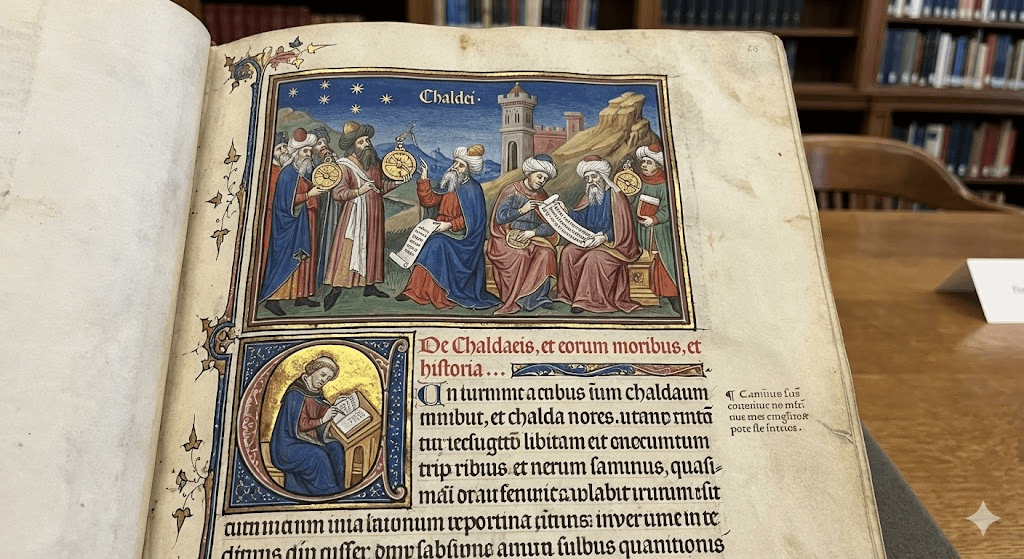
Various European travelers and scholars wrote accounts of encountering Chaldean Christians in the Middle East. These “little books” or treatises documented Chaldean customs, religious practices, and communities from a Western perspective.
While sometimes colored by misunderstanding, these accounts provide valuable historical documentation of Chaldean life during this period.
Historical Documentation:
- European travelers’ accounts
- Description of Chaldean customs
- Religious practice documentation
- Western perspective on Eastern Christians
ENTRY 39: 1457 WORLD MAP
Time Period: 1457 CE

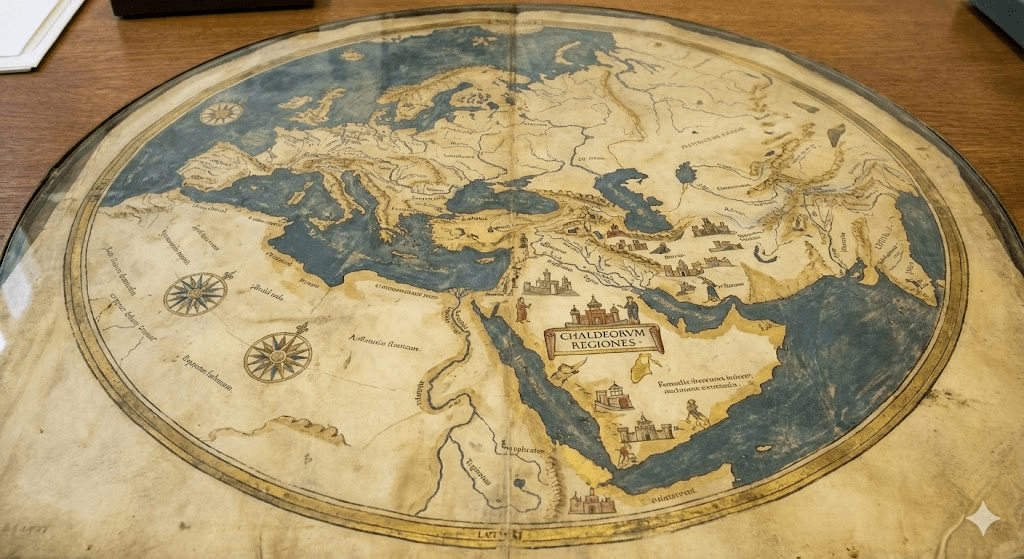
The Fra Mauro map of 1457, one of the most detailed world maps of the medieval period, explicitly marks “Chaldeorum regiones” (regions of the Chaldeans) in Mesopotamia. This demonstrates European awareness of Chaldean presence and identity in their ancestral homeland.
The map represents how Chaldeans were perceived and documented in European geographical knowledge of the time.
Cartographic Evidence:
- Explicit marking of Chaldean regions
- European geographical knowledge
- Documentation of Chaldean homeland
- Medieval worldview
ENTRY 40: LEGACY AND MARGINALIZATION
Time Period: 14th – 16th Century CE
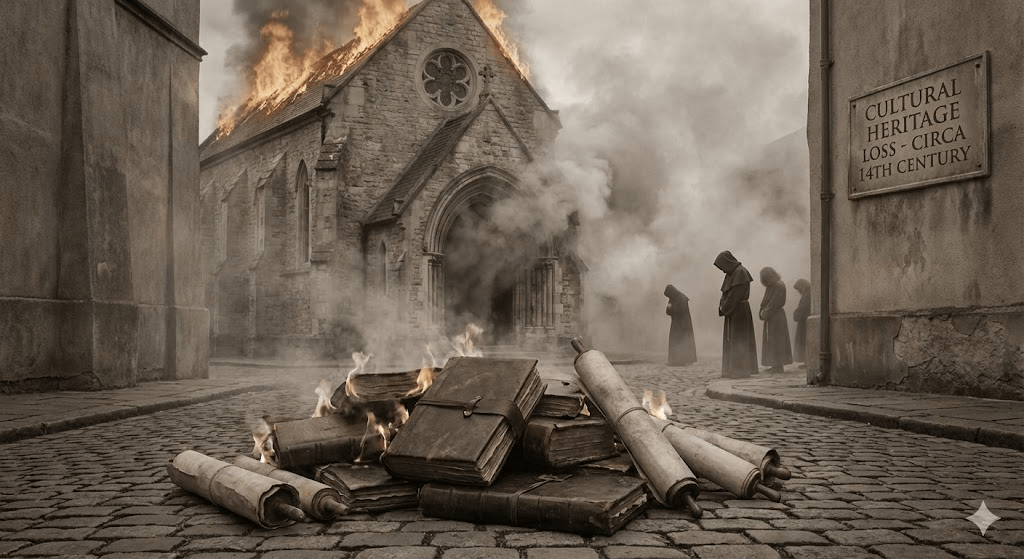
The period from the 14th to 16th centuries brought increasing marginalization and persecution for Chaldean Christians. Invasions by Timur (Tamerlane) in the 1390s devastated Christian communities across Mesopotamia and Persia.
Despite immense suffering, Chaldean communities survived, maintaining their faith and identity through systematic oppression, forced conversions, and violence.
Survival Through Persecution:
- Timurid invasions and massacres
- Systematic marginalization
- Community resilience
- Faith preservation despite oppression
ENTRY 41: PERSECUTION AND LOSS OF HERITAGE
Time Period: 15th – 17th Century CE
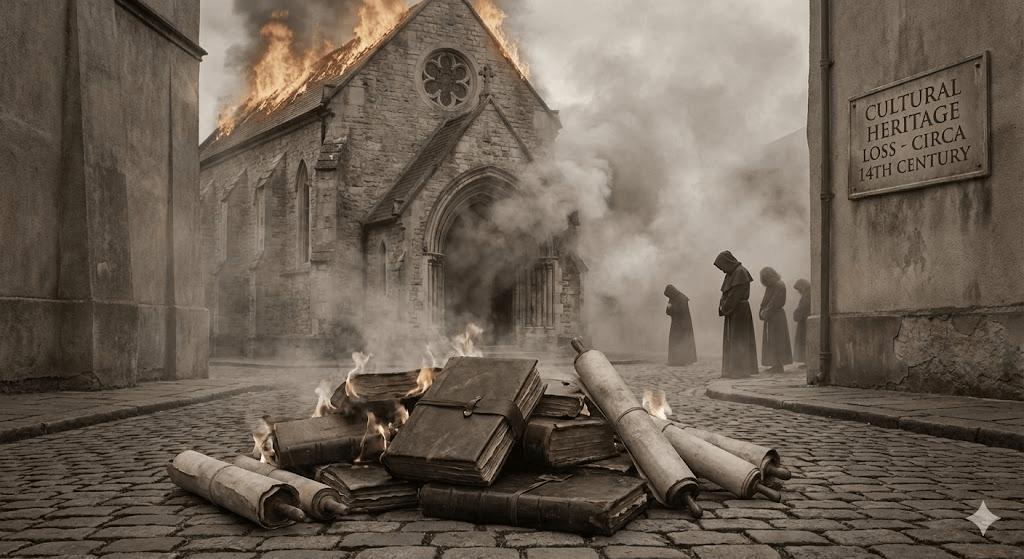
Centuries of persecution resulted in the destruction of countless Chaldean manuscripts, churches, and cultural artifacts. Libraries were burned, monasteries destroyed, and communities scattered.
The loss of heritage from this period is incalculable—ancient texts, historical records, and cultural knowledge disappeared forever. What survived did so through the dedication of scribes and communities who risked everything to preserve their identity.
Cultural Loss:
- Destruction of manuscripts and libraries
- Church and monastery demolition
- Scattered communities
- Heroic preservation efforts
ENTRY 42: 1445 CYPRUS UNION WITH VATICAN
Time Period: 1445 CE
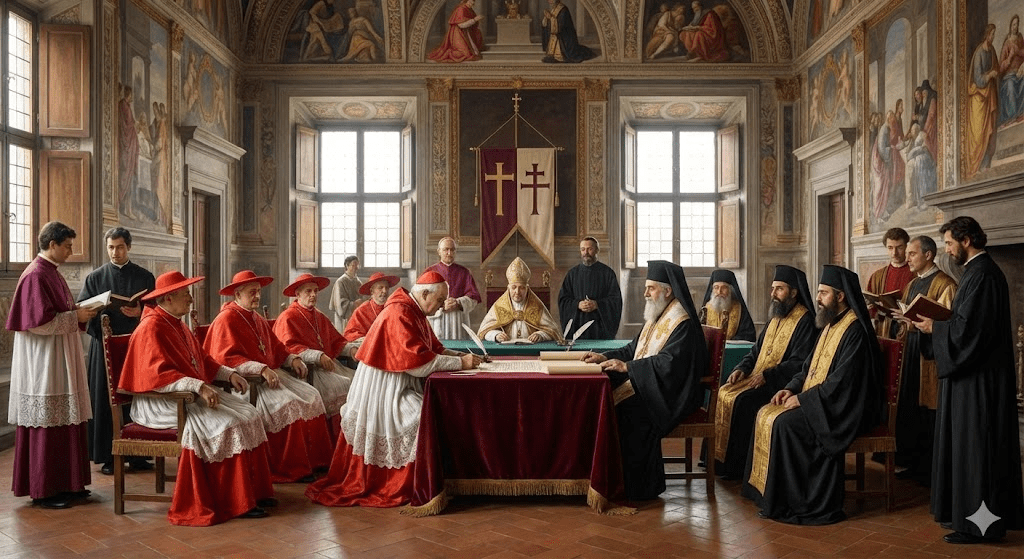
At the Council of Florence (1439-1445), a temporary union was declared between the Church of the East and the Catholic Church. Representatives from Cyprus formalized this union, though it had limited practical effect at the time.
This early attempt at union foreshadowed later developments that would lead to the formal establishment of the Chaldean Catholic Church.
Church Union Attempts:
- Council of Florence negotiations
- Cyprus connection
- Early Catholic-Eastern Christian relations
- Foundation for later union
ENTRY 43: PATRIARCHATE OF YOHANNAN SULAQA (1551)
Time Period: 1551 CE

In 1551, Yohannan Sulaqa, a bishop of the Church of the East, traveled to Rome seeking communion with the Catholic Church. Pope Julius III ordained him as “Patriarch of the Chaldeans,” formally establishing the Chaldean Catholic Church.
This moment marks the beginning of the modern Chaldean Catholic Church, though communities maintaining union with Rome had existed earlier. Sulaqa returned to his homeland but was soon martyred by Ottoman authorities.
Church Establishment:
- First Chaldean Catholic Patriarch
- Formal union with Rome (1551)
- Martyrdom of Sulaqa
- Beginning of modern Chaldean Catholic Church
ENTRY 44: PIETRO DELLA VALLE AND SITTI MAANI (17th Century)
Time Period: 1616-1626 CE

Pietro Della Valle, an Italian nobleman and traveler, married Sitti Maani Gioerida, a Chaldean Christian woman from Mesopotamia. His detailed travel writings documented Chaldean language, customs, and communities in the early 17th century.
Della Valle brought Chaldean manuscripts to Europe and wrote extensively about Chaldean culture, providing valuable documentation of the period. His marriage to Sitti Maani represents a personal bridge between East and West.
Cultural Documentation:
- Detailed European account of Chaldean life
- Marriage bridging cultures
- Manuscript collection for Europe
- Linguistic and cultural preservation
ENTRY 45: NATION OF THE CHALDEANS (1617)
Time Period: 1617 CE

In 1617, official documents from the Ottoman Empire explicitly referenced the “Nation of the Chaldeans,” recognizing them as a distinct millet (religious community) with specific rights and obligations.
This formal recognition acknowledged Chaldean distinct identity within the Ottoman administrative system, allowing community self-governance in religious and civil matters.
Official Recognition:
- Ottoman millet system inclusion
- Formal acknowledgment of distinct identity
- Community self-governance rights
- Legal protection (however limited)
ENTRY 46: SCRIBES AND WRITERS
Time Period: 16th – 17th Century CE
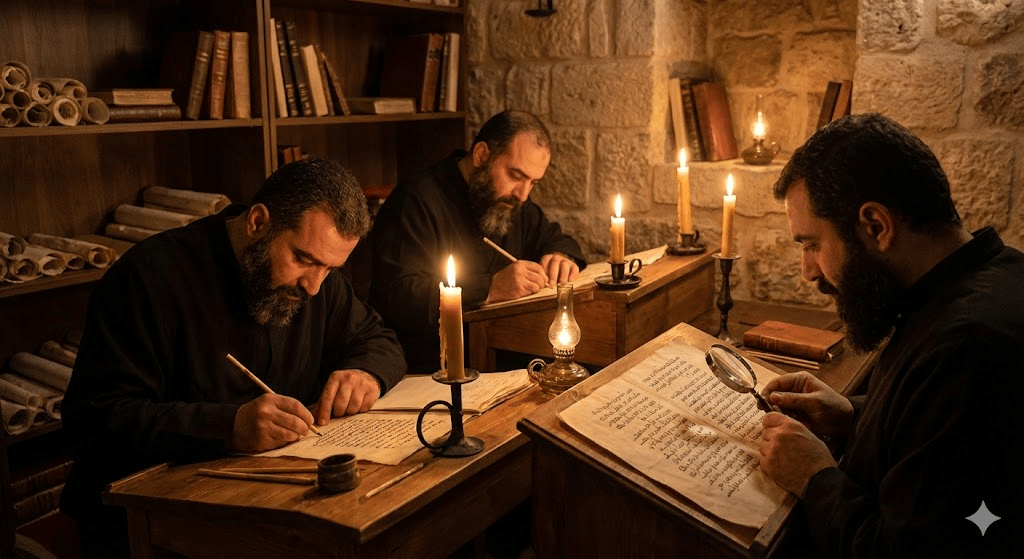
Throughout the Ottoman period, Chaldean scribes and scholars continued the ancient tradition of manuscript copying and preservation. Working in monasteries and churches, they maintained Aramaic literacy and preserved religious texts, liturgical works, and historical chronicles.
This scholarly tradition kept Chaldean heritage alive during centuries of political and social turmoil.
Literary Preservation:
- Manuscript copying tradition
- Aramaic language maintenance
- Religious text preservation
- Scholarly community continuity
ENTRY 47: JOSEPHUS ADJUTUS (17th Century)
Time Period: 17th Century CE

Josephus Adjutus was a Chaldean scholar who worked with European orientalists, helping them understand Aramaic and Syriac texts. His collaboration with Western scholars facilitated European study of Chaldean language and literature.
Scholarly Collaboration:
- Bridge between Eastern and Western scholarship
- Aramaic linguistic expertise
- Facilitation of European oriental studies
- Cultural knowledge transmission
ENTRY 48: ELIAS AL-MUSILI – FIRST MIDDLE EASTERNER TO TRAVEL TO THE AMERICAS (17th Century)
Time Period: 1668-1683 CE

Elias al-Musili (Elias of Mosul) was a Chaldean deacon who became the first documented Middle Easterner to travel to the Americas. Between 1668 and 1683, he journeyed through Spanish America, visiting Mexico, Guatemala, and Peru.
His detailed travel account, written in Arabic, provides a unique perspective on colonial Spanish America from a Middle Eastern Christian viewpoint. This remarkable journey demonstrates the global reach of Chaldean travelers centuries before modern migration.
Historic Journey:
- First Middle Easterner in the Americas
- Travels through Spanish colonies (1668-1683)
- Detailed travel writings in Arabic
- Bridge between continents and cultures
 EXPLORE THE CHALDEAN HISTORY